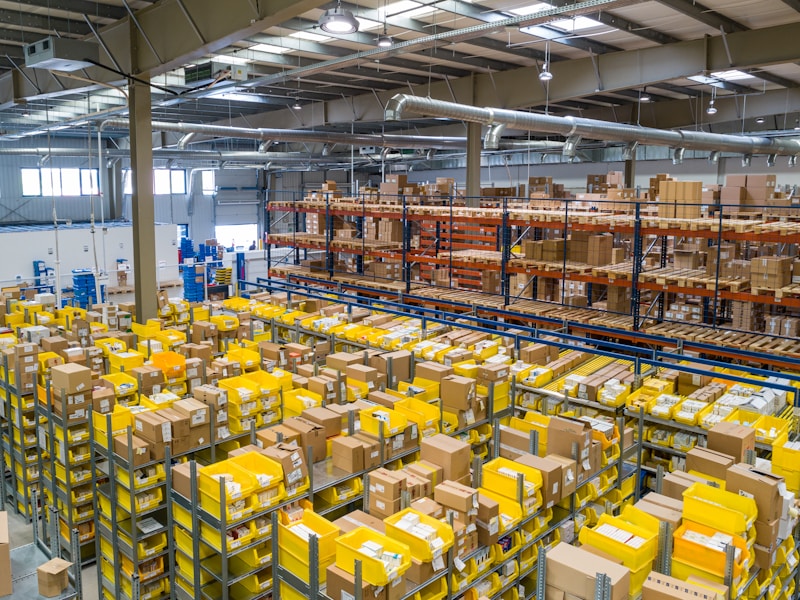

The gap between AI-DevOps adopters and laggards is already 16 percentage points of delivery cost. By 2028, Gartner projects it will be structural. This is how the gap is being built, mechanism by mechanism.
35%
Avg. Delivery Cost Reduction
$28.5B
AI in Logistics market by 2030 (MarketsandMarkets)
3x
Faster software release cycles vs. traditional DevOps (DORA, 2025)
The Operational Imperative Most Logistics Leaders Are Still Treating as Optional
In a sector where every dollar per shipment and every hour of delay is a direct margin event, logistics enterprises and the SaaS platforms serving them are still, in most cases, running DevOps and artificial intelligence as separate investment tracks. That separation is now a compounding liability.
Industry research (including McKinsey supply-chain analyses) indicates that companies which have deeply integrated AI into their DevOps pipelines report up to 35% reductions in last-mile and middle-mile delivery costs within 18 months of deployment. That is not the outcome of a single algorithm or a single sprint. It is the cumulative result of faster software iteration, real-time operational feedback loops, self-healing infrastructure, and route and fleet intelligence that adapts faster than any human operations team could sustain.
This post is not an argument that AI matters in logistics. That argument is settled. This is a precise account of the five mechanisms through which AI-powered DevOps produces that 35% reduction, the market data on where adoption currently stands, a concrete case study from a 9Series engagement that produced these results, and a readiness framework for organisations evaluating when and how to move.
Why Conventional DevOps Is Failing the Logistics Stack
Logistics software environments are, by nature, fragmented. A mid-size freight operator typically runs between five and twelve discrete systems: a transport management system, a warehouse management system, last-mile delivery applications, fleet telematics, carrier integration APIs, customer-facing tracking portals, and increasingly, IoT-connected device streams from vehicles, warehouses, and delivery points.
The DevOps challenge in this environment is not just reliable deployment. It is ensuring that these systems communicate with each other, respond to live operational signals, and do so without the kind of release lag that turns a software update into an operational bottleneck.
The cost of this fragmentation is well-documented. Gartner research on logistics technology suggests that the average logistics enterprise loses between 8% and 14% of annual operating margin to what analysts call integration debt: the ongoing cost of disconnected systems, manual data reconciliation, delayed releases, and the downstream delivery errors those delays produce.
14%
Avg. operating margin lost to integration debt (Gartner, 2025)
68%
Of logistics tech leaders cite release cycle lag as a top operational risk (Forrester, 2025)
4×
Faster incident response for AI-monitored pipelines vs. traditional setups (DORA, 2025)
The compounding factor is unique to logistics: cost structures are acutely sensitive to software release timing. A fuel routing optimisation algorithm that takes six weeks to move from development to production because of manual QA, rigid release windows, and insufficient test coverage delivers its savings six weeks later than it should. In a sector operating on 3 to 6% net margins, that delay is rarely trivial.
What AI-Powered DevOps Actually Does Differently
The term is used loosely in vendor marketing. It is worth being precise, because the distinction between genuinely AI-augmented DevOps and conventional DevOps with monitoring tools added on top is both architecturally and financially significant.
1. Predictive Pipeline Intelligence vs. Reactive Monitoring
Traditional DevOps monitoring tells you when something has broken. AI-powered DevOps tells you when something is about to break and in many cases resolves it before it does. Machine learning models trained on historical pipeline telemetry, test failure patterns, and deployment rollback data can predict, with 70 to 85% accuracy, which code commits are likely to introduce production defects before they are deployed.
2. Self-Healing Infrastructure and Dynamic Resource Allocation
AI-driven infrastructure management allows logistics platforms to dynamically allocate compute resources based on predicted demand: scaling up tracking API capacity before a peak delivery window, pre-warming routing servers ahead of a weather event, or throttling non-critical services during high-load periods. Traditional infrastructure management relies on static thresholds and human intervention. The difference, in cloud cost terms, is typically 20 to 28% in infrastructure expenditure.
3. Continuous Feedback Loops Between Operational Data and Software Iteration
The most transformational aspect of AI-powered DevOps in logistics is not within the software pipeline itself. It is the feedback loop between live operational data and the development cycle. When an AI model detects a pattern in GPS telemetry indicating that a particular route segment is consistently causing delivery delays, that insight should shorten the time between detection and a software fix. In AI-powered DevOps architectures, that loop can operate in hours. In traditional organisations, it takes weeks.
| Capability | Traditional DevOps | AI-Powered DevOps | Operational Impact |
|---|---|---|---|
| Incident Detection | Reactive (post-failure alerts) | Predictive (pre-failure signals) | 4× faster MTTR |
| Deployment Frequency | Weekly/bi-weekly release windows | Continuous with AI-gated quality checks | 3–5× faster releases |
| Infrastructure Spend | Static provisioning, manual scaling | Dynamic ML-based demand forecasts | 20–28% cost reduction |
| Test Coverage | Manual / incomplete QA coverage | AI-generated, risk-based prioritisation | 35–50% fewer production defects |
| Ops→Dev Feedback Loop | Manual reporting cycles (days/weeks) | Real-time telemetry ingestion to dev pipeline | Hours vs. weeks to iterate |
| Route/Fleet Optimisation | Quarterly software updates | Continuous model retraining & live deployment | Up to 35% delivery cost savings |
Five Mechanisms That Produce the 35% Cost Reduction
The 35% figure is a composite outcome produced by five distinct, measurable mechanisms. Each has a different ROI timeline and requires different organisational capability to unlock. Understanding them separately matters for scoping and prioritisation.
1. Intelligent Route Optimisation Released at Machine Speed
Route optimisation algorithms are only as valuable as the frequency with which they are updated and deployed. AI-powered DevOps dramatically shortens the cycle between algorithm improvement and live deployment. ML models trained on traffic patterns, weather data, historical delivery times, and driver behaviour can update routing logic daily or even hourly, but only if the DevOps infrastructure can support continuous deployment without operational risk. AI-gated CI/CD pipelines validate routing changes against simulated delivery scenarios before releasing them to production, eliminating the manual QA bottleneck that typically delays these updates by four to six weeks.
2. Predictive Fleet Maintenance Integrated into the Software Release Cycle
One of the most underestimated cost levers in logistics is the integration of predictive maintenance data into the software development lifecycle. When IoT sensors on vehicles feed real-time mechanical data into a DevOps observability stack, engineering teams can prioritise software releases that adjust route load recommendations based on vehicle health, reducing both breakdown-related delays and the fuel overconsumption caused by overloaded or under-maintained vehicles. This integration, between operational hardware telemetry and software deployment priority, is what separates AI-powered DevOps from conventional monitoring approaches.
3. AI-Driven Infrastructure Cost Optimisation Across Multi-Cloud Logistics Stacks
Logistics SaaS platforms and enterprise logistics teams running multi-cloud architectures face disproportionate infrastructure costs when workloads are not intelligently managed. AI-powered FinOps tools integrated into the DevOps pipeline can reduce cloud spend by 22 to 30% by continuously right-sizing resources, identifying idle compute, and shifting workloads to lower-cost regions during off-peak windows. For SaaS platforms serving logistics clients, this directly improves unit economics and enables more competitive pricing.
4. Automated Quality Assurance Eliminating Costly Last-Mile Software Failures
In logistics, a software defect in a last-mile delivery application does not produce a poor user experience. It produces a failed delivery, a customer service escalation, and a re-delivery cost. AI-powered test generation and risk-based test prioritisation ensure that the highest-risk code paths, including delivery assignment logic, real-time tracking, payment processing, and driver communication, receive the most rigorous automated testing on every release cycle. This eliminates the deprioritisation of manual QA that is otherwise inevitable under release pressure.
5. Real-Time Observability Reducing Mean Time to Resolution of Delivery-Impacting Incidents
When a logistics platform experiences an incident, whether an API failure in a carrier integration, a tracking data outage, or a routing service degradation, every minute of downtime translates to real delivery cost. AI-powered observability platforms reduce mean time to resolution by correlating signals across hundreds of services and surfacing root causes that would take human engineers hours to isolate manually. DORA’s 2025 State of DevOps Report benchmarks elite-performing organisations as restoring services 4× faster than organisations using traditional monitoring.
| Cost Driver | AI-DevOps Lever | Typical Reduction | Timeline to Value |
|---|---|---|---|
| Fuel & Route Inefficiency | Continuous route algorithm deployment | 18–25% | 3–6 months |
| Fleet Maintenance Costs | Predictive maintenance + IoT integration | 20–32% | 6–12 months |
| Cloud Infrastructure Spend | AI-powered FinOps & workload management | 22–30% | 2–4 months |
| Re-delivery & Software Failure | AI-driven QA & automated test generation | 30–50% | 1–3 months |
| Incident & Downtime Cost | AI observability & auto-remediation | 40–60% MTTR reduction | 2–4 months |
| Manual Operational Overhead | Agentic AI workflow automation | 30–50% | 6–9 months |
What This Looks Like in Practice: 9Series Logistics Platform Engagement
The five mechanisms above are not theoretical. The following engagement demonstrates how they combine in a real logistics environment and which specific levers drove the headline result.
CASE STUDY · TRANSPORT & LOGISTICS
From Regional Transport App to Industrial-Grade Freight Ecosystem
An India-based logistics platform operator needed to evolve from a mobile-first regional transport application into a full industrial-grade logistics ecosystem, coordinating vehicles, drivers, manufacturers, transporters, and enterprise clients across a unified digital infrastructure. The engineering challenge was not just scale. It was intelligence, and the speed at which that intelligence could be deployed and iterated. 9Series engineered a cloud-based logistics intelligence platform powered by machine learning and built on a DevOps-ready architecture. The AI/ML capabilities deployed included:
▶ A predictive pricing intelligence engine that updated rate recommendations continuously based on market signals (Mechanism 1: route and pricing algorithm speed)
▶ Load optimisation and route congestion forecasting deployed through a continuous delivery pipeline (Mechanism 1 + Mechanism 4: route intelligence + automated QA)
▶ IoT-integrated fleet telemetry feeding vehicle health data into release prioritisation decisions (Mechanism 2: predictive maintenance loop)
▶AI-powered observability stack with automated incident correlation, reducing MTTR to under two hours from a previous baseline of 12+ hours (Mechanism 5)
The 35% reduction in transaction costs was not the result of any single feature. It was the compound effect of faster algorithm deployment, automated quality gates, smarter load distribution, and continuous model improvement, all enabled by an AI-powered DevOps infrastructure that eliminated the four-to-six-week deployment lag that had previously made algorithm improvements commercially inert by the time they reached production.Where the Market Is and Where It Is Going
The competitive dynamics of logistics technology are shifting faster than most mid-market enterprise leaders have factored into their planning cycles.
| Market Indicator | 2024 | 2026 | 2030 (est.) | Source |
|---|---|---|---|---|
| AI in Logistics Market Size | $6.2B | $10.1B | $28.5B | MarketsandMarkets |
| Logistics Companies with AI in DevOps | 18% | 34% | 71% | Gartner |
| Avg. Delivery Cost Reduction (adopters) | 12–18% | 28–35% | 40–50% | McKinsey |
| CI/CD Adoption in Logistics SaaS | 41% | 62% | 88% | DORA 2025 |
| AI-Driven Fleet Optimisation Adoption | 22% | 45% | 80% | Forrester |
| Cloud-Native Logistics Platforms | 29% | 54% | 82% | IDC |
The data reflects a market in rapid transition. Enterprises that adopted AI-powered DevOps practices in 2023 to 2024 are already operating with a 16 to 17 percentage point cost advantage over those that have not. According to Gartner’s modelling, by 2028 that gap will be structural: extremely difficult to close without a complete platform rebuild, an undertaking that is three to four times more expensive than a phased AI integration programme executed today.
“The question for logistics enterprises and logistics SaaS platforms in 2026 is not whether to integrate AI into DevOps — It is whether to do so now, on your own terms, or in 18 months under competitive pressure, at a much higher cost and from a structurally weaker position.” 9Series Engineering Leadership
Implementation Roadmap: From Pilot to Production
One of the most consistent failure modes in enterprise AI adoption is the perpetual pilot: a proof of concept that demonstrates value in a controlled environment but never makes it into the core operational stack. The following four-phase roadmap is designed to move organisations from initial instrumentation to full AI-DevOps capability systematically, with measurable cost reduction at each stage.
Foundation & Observability Baseline
Instrument your existing DevOps pipeline with AI-native observability. Establish baseline MTTR, deployment frequency, and change failure rate. Map integration debt between logistics systems. Identify the top three cost-driving failure modes.
Target: Observability coverage across core systems. Integration debt quantified.
CI/CD Modernisation with AI Quality Gates
Deploy AI-powered test generation and risk-based QA prioritisation. Move highest-cost code paths (routing, tracking, delivery assignment) to continuous delivery with automated validation.
Target: 30-50% reduction in production defects within 60 days of deployment.
ML Model Integration & Feedback Loop Engineering
Integrate live operational telemetry (GPS, IoT, fleet data) into the development pipeline. Deploy ML models for route optimisation, demand forecasting, and predictive maintenance as continuously deployed microservices.
Target: Ops-to-dev feedback loop operating in hours. Route and fleet costs beginning to decline.
Agentic AI & Autonomous Operations Scaling
Deploy agentic AI capabilities for autonomous incident resolution, self-optimising infrastructure, and end-to-end supply chain event response.
Target: Full 30-35% delivery cost reduction realised. 3×+ release velocity improvement.
Readiness Assessment: Where Does Your Organisation Stand?
Not all logistics organisations are in the same position to execute an AI-powered DevOps transformation. The programme’s success depends on a set of organisational and technical preconditions that are worth evaluating honestly before selecting a technology partner or scoping an engagement.
| Readiness Dimension | Minimum Viable Threshold | Accelerator Condition | Risk If Not Addressed |
|---|---|---|---|
| Data Infrastructure | Centralised telemetry from core systems | Real-time data streaming pipeline in place | AI models trained on incomplete data produce poor recommendations and erode trust in the programme |
| DevOps Maturity | Basic CI/CD and version control in place | Existing containerisation and cloud-native architecture | AI tooling cannot integrate with waterfall-only release processes |
| Engineering Capability | At least one ML-aware engineering lead | Dedicated MLOps or AI platform team | AI models go stale without ongoing retraining and monitoring |
| Executive Alignment | Senior leadership ownership of programme | CEO/CFO visibility with clear cost-reduction KPIs | Programme stalls at pilot phase without senior sponsorship |
| Partner Selection | Partner with logistics domain and AI/DevOps track record | Partner with embedded logistics case studies at scale | Generic AI vendors systematically underestimate logistics operational complexity |
Final Perspective: The Window for First-Mover Advantage Is Measured in Quarters, Not Years
The evidence is sufficiently robust to state a direct conclusion: logistics enterprises and the SaaS platforms serving them that delay AI-powered DevOps integration are not simply foregoing competitive advantage. They are accepting a structural cost disadvantage that compounds with every quarter that passes.
The 35% delivery cost reduction is not a ceiling. Based on the current trajectory of AI capability and the performance of organisations already operating at this level, it is more accurately described as an early entry point. The enterprises investing in AI-powered DevOps today, building the feedback loops, the continuous delivery infrastructure, and the machine learning operational layer, are positioning themselves for a 40 to 50% cost advantage over the next three years.
For technology and operations leaders evaluating this decision, the most important question is not which AI tool to deploy. It is which partner has the capability to integrate AI into the DevOps lifecycle as a coherent operational programme, not as a collection of point solutions, and has done so in logistics environments where the stakes of getting it wrong are measured not in code quality scores, but in delayed shipments, failed deliveries, and margin compression.
Where Does Your Organisation Sit on the Readiness Curve?
9Series has built AI-powered DevOps and logistics platforms across fleet telematics, port operations, transport optimisation, and supply chain intelligence. Our logistics engineering team can benchmark your current DevOps maturity, identify the highest-value integration points, and scope a phased programme with measurable cost reduction at each stage.
Book a 45-Minute DevOps Diagnostic